


A technician with a Tulsa, Oklahoma HVAC company went out on a routine service call on July 9. The home needed several repairs, but the customer didn’t want the work done, and when it came time to collect the $89 service fee, the homeowner pulled a gun. The technician left the home safely, the company filed a police report, and he was back on the job the next day. The incident drew attention across the industry after ACHR NEWS reported on it.
The company’s co-owner told Tulsa’s FOX23 that “it’s just unfortunate that this is where we’re at in life,” and that it was time to start talking openly about protecting technicians.
HVAC technicians walk into strangers’ homes all day, usually alone, and HVAC technician safety training has to account for the person answering the door as much as the equipment behind it.
Warning signs a customer may escalate
A customer on the verge of becoming violent usually shows it first. Technicians working in dangerous homes should watch for:
- Muscle tension in the face, including flared nostrils
- Stuttering, or speaking in a pitch higher or lower than normal
- Sarcasm, challenges, or threats
- Obvious intoxication
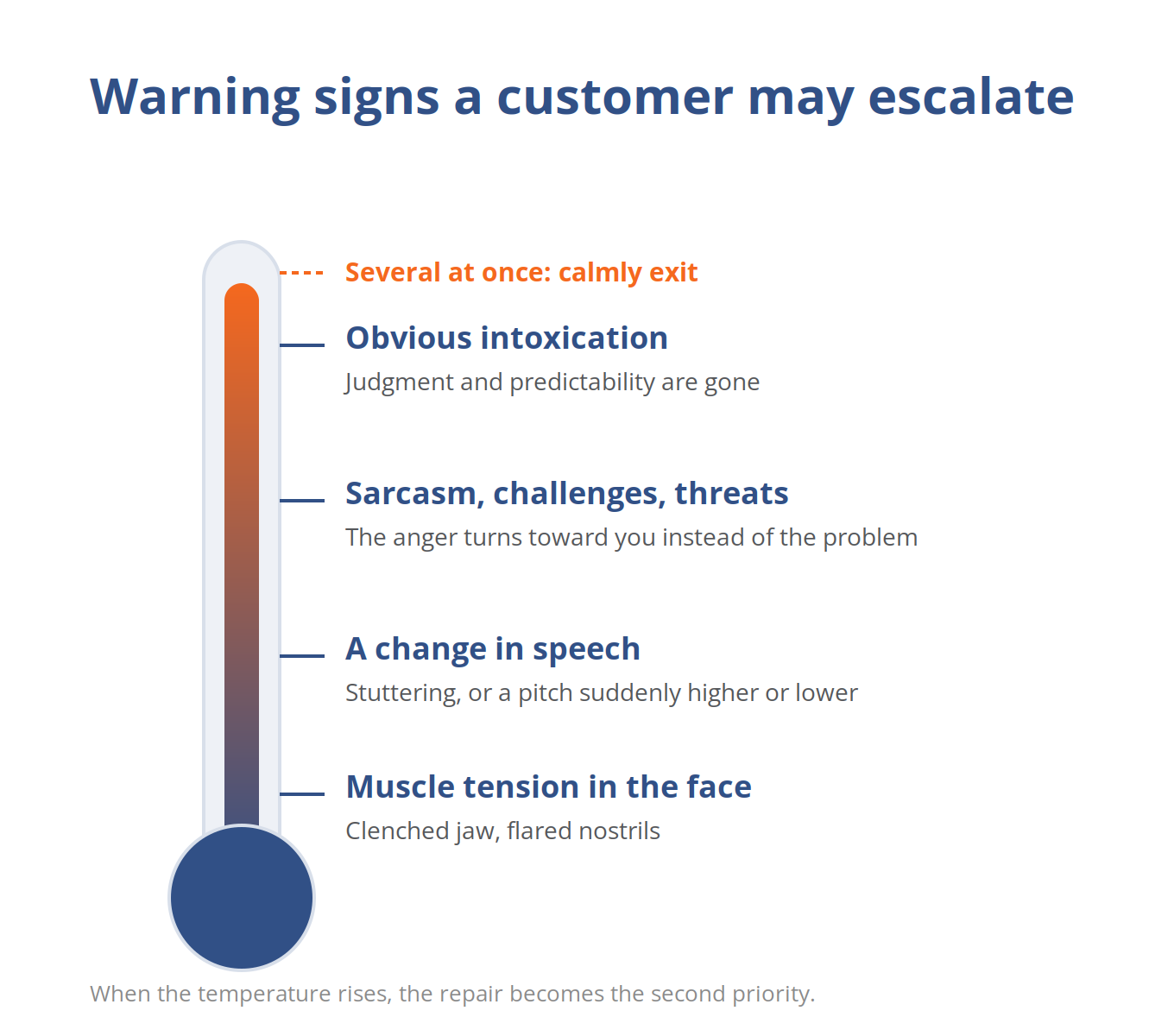
Any one of these on its own may mean nothing. A customer showing a combination of them is a customer the technician should treat with caution, and the repair becomes the second priority.
How to talk to an angry customer
An angry customer usually isn’t angry at the technician. He’s angry at a dead compressor, a hot house, and a bill he didn’t budget for, and the technician is simply the first person available to absorb it. Rick Cronholm of Johansen & Anderson, an ACCA Bronze member in Joliet, Illinois, put it this way: sympathize with the customer, feel their pain, and make clear you want the problem fixed as much as they do.
Getting there in the middle of a tense service call takes a few deliberate habits:
- Keep the anger out of your own voice and speak in a low, even tone
- Stay out of the customer’s personal space, and never turn your back
- Work to shift the customer from venting into problem-solving mode
- If you need a reset, tell the customer you need a moment to gather your thoughts and step outside for five minutes
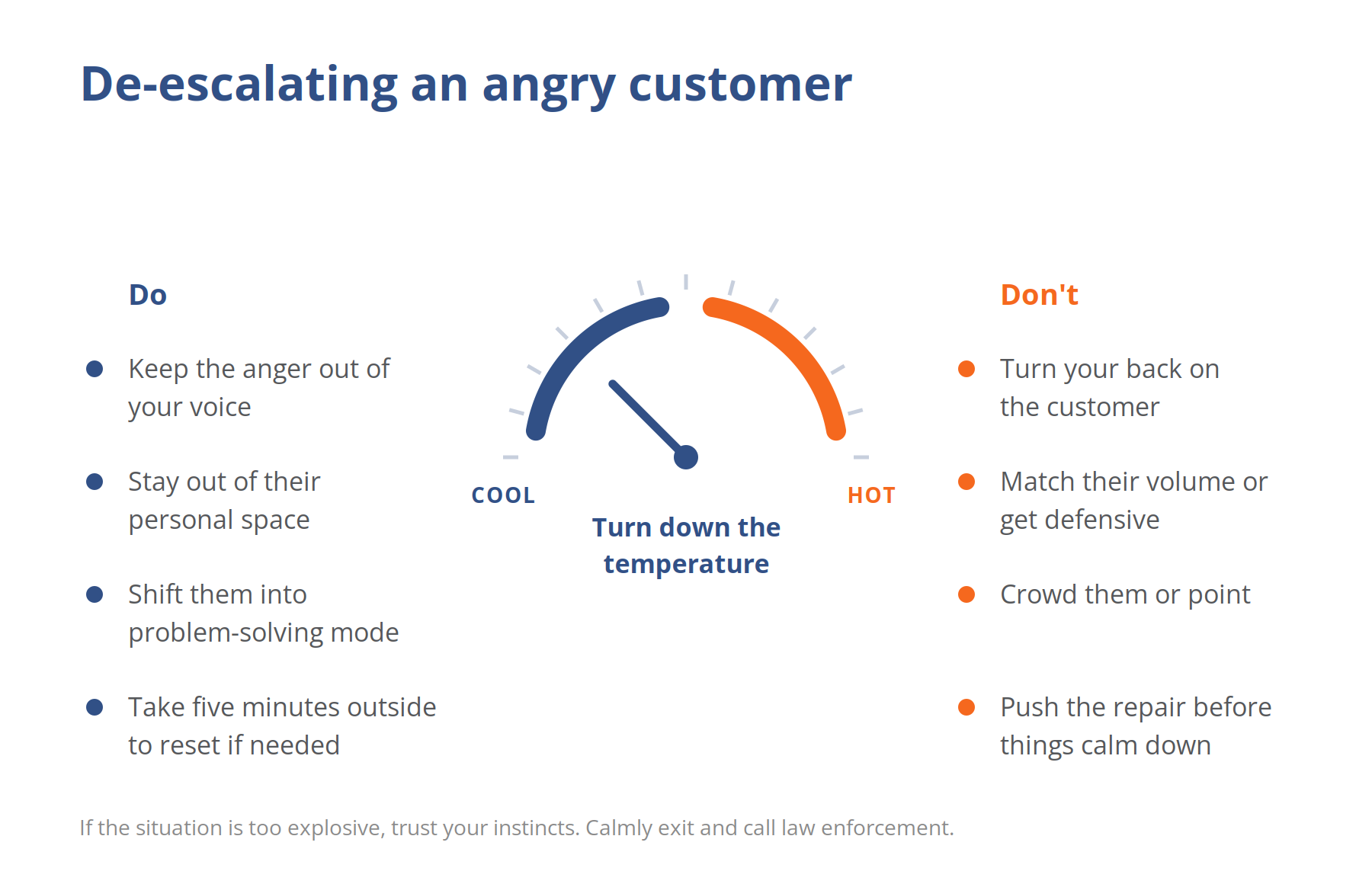
A sincere apology for the situation, followed by taking control of the repair conversation, defuses most angry customers before anything escalates.
Know when to leave
Most tense calls end with a fixed system and a calmer homeowner. For the ones that don’t, the standing rule in our dangerous-homes guidance applies: if the situation is too explosive, calmly exit the premises. A technician who feels a call going wrong should trust that instinct, disengage, get to a safe location, and involve law enforcement if there is any threat of violence.
Company policy determines whether technicians follow that rule in the moment. A newer employee who worries about being written up for an incomplete call may hesitate at exactly the wrong time. Contractors should tell their teams directly, and repeat it in safety meetings, that no one will be reprimanded for putting his safety ahead of a service fee. The Tulsa technician left, and his company backed him. That’s the standard.
Make customer communication part of training
Contractors already train technicians on refrigerant handling, electrical work, and fall protection. De-escalation belongs on that list. Companies that walk through hostile-customer scenarios in regular safety meetings, and again after any incident, send technicians into homes knowing what to do instead of working it out with an angry homeowner standing in the doorway.
ACCA is currently rolling out several new on-demand training programs for technicians and office and sales staff, including topics on client communication.
Browse our On-Demand Training Hub to find the right fit for your team.
Putting safety first
Nobody can predict which front door opens on a bad service call. Preparation is the part contractors control: technicians who recognize trouble early, know how to talk a customer down, and leave without hesitation when a call stops being safe.
The post HVAC technician safety when a customer turns hostile appeared first on ACCA HVAC Blog.